Industrial Tank Blast Cleaning: SSPC Standards, Micron Profiles, and What Actually Matters
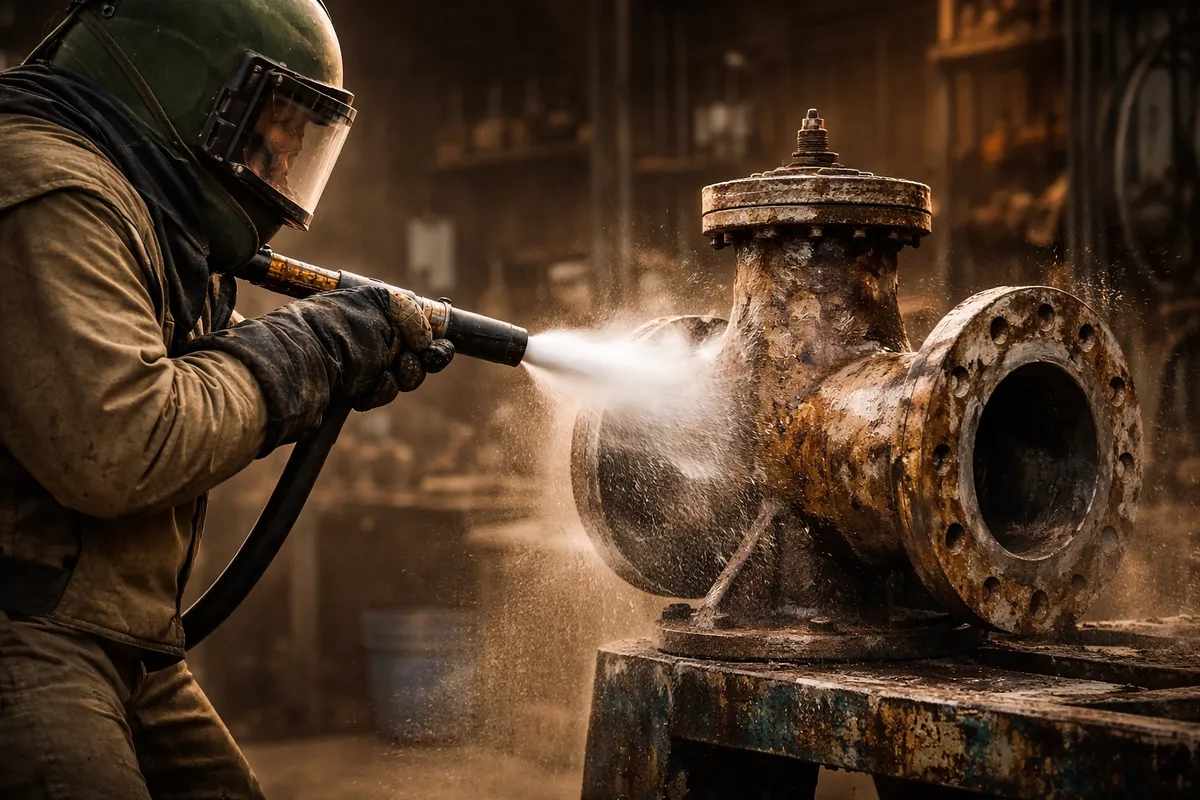
Tank relining jobs are where blasting gets serious. You're working inside confined spaces, dealing with hazardous coatings, meeting strict surface prep specifications, and the coating system going on after you is often worth more than the blasting itself. There's no room for "close enough."
Here's how we approach industrial tank blast cleaning.

Why Tanks Need Blasting
Petroleum storage tanks, water treatment tanks, chemical process vessels, and fuel tanks all have internal linings that degrade over time. Corrosion works underneath the lining, the coating delaminates, and eventually the tank fails inspection or starts leaking.
Relining a tank means stripping the old coating system down to bare steel, achieving a specific surface profile, and getting the new lining applied within a tight window before the steel starts corroding again.
SSPC Surface Preparation Standards
The coating manufacturer and the project engineer will specify which SSPC (Society for Protective Coatings) standard the surface needs to meet. These aren't suggestions — they're contractual requirements, and the coating warranty depends on hitting them.

The three you'll see most often on tank work:
SSPC-SP 5 / NACE No. 1 — White Metal Blast
The highest standard. When viewed without magnification, the surface shall be free of all visible oil, grease, dust, dirt, mill scale, rust, paint, oxides, corrosion products, and other foreign matter. 100% of the surface must be clean.
This is what you spec when the tank is going to hold drinking water, food-grade product, or when the lining system is extremely expensive and failure isn't an option.
SSPC-SP 10 / NACE No. 2 — Near-White Metal Blast
Almost as clean as SP-5, but allows light shadows, slight streaks, or minor discolorations on up to 5% of each square inch. In practice, this means 95% of the surface is perfectly clean bare steel.
This is the most common spec for petroleum tanks and chemical storage. It's the sweet spot between coating performance and practical achievability.
SSPC-SP 6 / NACE No. 3 — Commercial Blast
Allows staining on up to 33% of each square inch. The staining can be light shadows from rust, mill scale, or old paint. This is used for less critical applications — exterior tank surfaces, structural steel, equipment frames.
How We Verify
We don't eyeball it. After blasting, we use:

- SSPC-VIS 1 visual comparators — standardized photo reference cards that show exactly what each cleanliness level looks like
- Surface profile gauges (Testex replica tape or digital profilometers) to measure the anchor pattern in microns/mils
- Dust tape tests (SSPC-SP 12 / ISO 8502-3) to verify the surface is free of dust and debris before coating
All measurements get documented and included in our job report. When the coating inspector shows up, the paperwork is already done.
Surface Profile: The Number That Makes or Breaks the Lining
Every coating system has a specified surface profile range — the microscopic peak-to-valley roughness of the blasted steel. This is measured in mils (thousandths of an inch) or microns.
- Thin-film coatings (epoxies, urethanes): Typically spec 1.5-3.0 mils
- Thick-film linings (novolac epoxy, vinyl ester): Typically spec 3.0-5.0 mils
- Thermal spray metalizing: Can require 3.5-5.0+ mils
Too shallow a profile and the coating won't anchor properly — it'll delaminate under service conditions. Too deep and the peaks poke through the coating, creating thin spots that corrode first.
Profile is controlled by three variables: media type, media size, and air pressure. On tank interiors, we typically run:
- Steel grit (G40 or G50) for aggressive profiles on heavy plate steel
- Garnet (80 mesh) for precise, consistent profiles in the 2.5-3.5 mil range
- Crushed glass (30/60) for general-purpose work where the spec allows it
Confined Space: The Dangerous Part
Tank interiors are OSHA-defined confined spaces. That means:

- Atmospheric monitoring before and during entry — checking oxygen levels, combustible gas, and toxic vapor concentrations
- Ventilation — forced air supply to maintain breathable atmosphere and clear blast dust
- Attendant stationed outside the tank at all times
- Rescue plan and equipment on site
- Entry permits signed off before anyone goes in
We don't cut corners on confined space protocol. A tank that held petroleum products can have residual vapors that are explosive or toxic. The blast dust itself reduces visibility and air quality rapidly. Proper ventilation isn't just about comfort — it's about going home at the end of the day.
Coating Application Window
After blasting to spec, the clock starts. Most coating manufacturers require application within 4-8 hours of blasting, depending on ambient humidity. In a tank interior, we control humidity with dehumidification equipment to extend the window and prevent flash rust.
On large tanks that can't be fully blasted in one shift, we work in sections — blast a section, coat it, move to the next. This requires close coordination between our blast crew and the coating applicator.
What We Need From You
If you've got a tank relining project, here's what helps us give you an accurate quote:
- Tank dimensions (diameter, height, capacity)
- Current lining system (what's on there now)
- Previous contents (petroleum, water, chemicals)
- Required SSPC standard and profile spec
- Coating system being applied (manufacturer and product)
- Access constraints (manway size, scaffolding requirements)
- Timeline requirements
We'll come do a site visit, assess the condition, and give you a fixed-price proposal with a defined scope. No hourly billing surprises.